|
|
|---|


Showing posts with label Music. Show all posts
Showing posts with label Music. Show all posts
Wednesday, June 29, 2011

Monday, June 27, 2011
Saturday, June 18, 2011
Friday, March 11, 2011
Thursday, March 10, 2011
MODS MUSIC
Well, if I was born in UK and if I had 20 years in the 1963 I would have been a Rocker, because of the motorbike.
But Mods were listening some better music


Tuesday, March 8, 2011
Thursday, March 3, 2011
Friday, February 11, 2011
Wednesday, January 26, 2011


Sunday, January 23, 2011
Friday, January 7, 2011
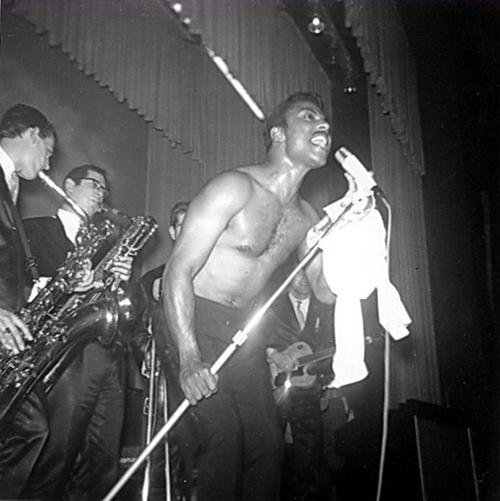
ROCK AROUND THE CLOCK
Well, thse were not only Genious. Here following a selection of real REBELS.
Without them, there would never been The Rolling Stones, The Beatles, The Led Zeppelin,
and today ... only silence ...




Tuesday, January 4, 2011
Sunday, January 2, 2011
PUNK or ROCKER (final definition)
What ever you think to be or feel
PUNK or ROCKER
The only important thing is to feel and to be free
Thursday, December 30, 2010
Tuesday, April 13, 2010
Nirvana
.
By Eric Johnson
The first time I heard Nirvana, it was a classic record-store experience, which is something that's becoming increasingly rare these days. I walked into Rocks in Your Head in New York and asked the woman behind the counter, "What's new?" She put on "Smells Like Teen Spirit." I thought, "Wow. Somebody managed to combine R.E.M. and Metallica." I had never heard the term grunge, and I didn't know that it was going to be a phenomenon. I just knew that I was listening to something profound: a great piece of music.

My favorite song on Nevermind was "Lithium." Kurt Cobain tapped into something in the culture that nobody had given a voice to before: passionate ambivalence. "I'm so ugly, but that's OK/'Cause so are you." He captured the idea of having incredibly powerful feelings about not having feelings.
Cobain changed the course of where the music went. There are certain people where you can see the axis of musical history twisting on them: Hendrix was pivotal, Prince was pivotal, Cobain was pivotal. (I'm hoping that Andre 3000 of OutKast will turn out to be pivotal, but it's going to take a couple more albums to tell.)


And Cobain was a terrific guitarist. I said that to a big Joe Satriani fan, and he got really upset with me; he didn't think Cobain had enough chops. You can't say Cobain was a great songwriter but not a great guitarist -- because he couldn't have written those songs without the guitar. You can't separate out his Big Muff guitar playing - it was essential to the music he made, and his altered tunings were incredibly influential. Just like body piercing really took off as a trend after the first Lollapalooza, I think altered, tuned-down guitars were much more prominent in the music after Nirvana.
When I think about Nirvana, I think about the Bad Brains and the Sex Pistols. All those bands seem radical and edgy and outside the box and loud, but the tunes are incredibly melodic. They all wrote great songs with a core of emotion, loneliness and human feeling -- the same things that Burt Bacharach and Hal David wrote songs about.After the breakup of Living Colour, I put out a solo instrumental record called Mistaken Identity, which included a song called "Saint Cobain." I'll never forget the day I heard that he had committed suicide. Success on the level that Nirvana had is traumatizing. People win the lottery, and after all the money's gone, they turn around and say, "You know, this is the worst thing that ever happened to me and my family." And everyone who hasn't gotten that phone call can't understand. They say, "Man, you just got $5 million -- what are you talking about?" I wish Kurt Cobain was still around to make music and confront George Bush. Can you imagine the song he would have written about reality TV?
 picture by thankmelaterr
Something else happened to Cobain that I think was a shame: Because Nirvana became popular, he had to confront this notion that he had sold out and establish this sense of purity. It's one thing to consider purity if you're judging an emerald or a pearl, but with people, purity is a dodgy concept. It can often be dangerous: Just consider the notions of artistic purity or racial purity. But I do believe Cobain was perfect, in a way: He was perfectly flawed.
 Added by Zac Burke
.
By Eric Johnson
The first time I heard Nirvana, it was a classic record-store experience, which is something that's becoming increasingly rare these days. I walked into Rocks in Your Head in New York and asked the woman behind the counter, "What's new?" She put on "Smells Like Teen Spirit." I thought, "Wow. Somebody managed to combine R.E.M. and Metallica." I had never heard the term grunge, and I didn't know that it was going to be a phenomenon. I just knew that I was listening to something profound: a great piece of music.

My favorite song on Nevermind was "Lithium." Kurt Cobain tapped into something in the culture that nobody had given a voice to before: passionate ambivalence. "I'm so ugly, but that's OK/'Cause so are you." He captured the idea of having incredibly powerful feelings about not having feelings.
Cobain changed the course of where the music went. There are certain people where you can see the axis of musical history twisting on them: Hendrix was pivotal, Prince was pivotal, Cobain was pivotal. (I'm hoping that Andre 3000 of OutKast will turn out to be pivotal, but it's going to take a couple more albums to tell.)


And Cobain was a terrific guitarist. I said that to a big Joe Satriani fan, and he got really upset with me; he didn't think Cobain had enough chops. You can't say Cobain was a great songwriter but not a great guitarist -- because he couldn't have written those songs without the guitar. You can't separate out his Big Muff guitar playing - it was essential to the music he made, and his altered tunings were incredibly influential. Just like body piercing really took off as a trend after the first Lollapalooza, I think altered, tuned-down guitars were much more prominent in the music after Nirvana.
When I think about Nirvana, I think about the Bad Brains and the Sex Pistols. All those bands seem radical and edgy and outside the box and loud, but the tunes are incredibly melodic. They all wrote great songs with a core of emotion, loneliness and human feeling -- the same things that Burt Bacharach and Hal David wrote songs about.After the breakup of Living Colour, I put out a solo instrumental record called Mistaken Identity, which included a song called "Saint Cobain." I'll never forget the day I heard that he had committed suicide. Success on the level that Nirvana had is traumatizing. People win the lottery, and after all the money's gone, they turn around and say, "You know, this is the worst thing that ever happened to me and my family." And everyone who hasn't gotten that phone call can't understand. They say, "Man, you just got $5 million -- what are you talking about?" I wish Kurt Cobain was still around to make music and confront George Bush. Can you imagine the song he would have written about reality TV?
 picture by thankmelaterr
Something else happened to Cobain that I think was a shame: Because Nirvana became popular, he had to confront this notion that he had sold out and establish this sense of purity. It's one thing to consider purity if you're judging an emerald or a pearl, but with people, purity is a dodgy concept. It can often be dangerous: Just consider the notions of artistic purity or racial purity. But I do believe Cobain was perfect, in a way: He was perfectly flawed.
 Added by Zac Burke
.
Monday, March 29, 2010
The Clash
.
by Eric Johnson
The Clash were an English rock band that formed in 1976 as part of the original wave of British punk rock. Along with punk, they experimented with reggae, ska, dub, funk, rap, dance and rockabilly. For most of their recording career, The Clash consisted of Joe Strummer (lead vocals, rhythm guitar), Mick Jones (lead guitar, vocals), Paul Simonon (bass, backing vocals, occasional lead vocals) and Nicky "Topper" Headon (drums, percussion). Headon left the group in 1982, and internal friction led to Jones's departure the following year. The group continued with new members, but finally disbanded in early 1986.
 Peter Howard,Mick Jones,Joe Strummer,Paul Simenon on tour, Amarillo, Texas.
The Clash were a major success in the UK from the release of their debut album, The Clash, in 1977. Their third album, London Calling, released in the UK in December 1979, brought them popularity in the United States when it came out there the following month. Critically acclaimed, it was declared the best album of the 1980s a decade later by Rolling Stone magazine.
The Clash's politicised lyrics, musical experimentation and rebellious attitude had a far-reaching influence on rock, alternative rock in particular. They became widely referred to as "The Only Band That Matters", originally a promotional slogan introduced by the group's record label, CBS. In January 2003 the band—including original drummer Terry Chimes—were inducted into the Rock and Roll Hall of Fame. In 2004, Rolling Stone ranked The Clash number 30 on their list of the 100 Greatest Artists of All Time.

After rehearsing with Strummer for less than a month, The Clash made their debut on 4 July 1976, supporting the Sex Pistols at the Black Swan in Sheffield. The band apparently wanted to make it onstage before their rivals in The Damned—another London SS spinoff—made their own scheduled debut two days later. The Clash would not play in front of an audience again for another five weeks. Levene was becoming disaffected with his position in the group. At the Black Swan, he approached the Sex Pistols' lead singer, John Lydon (then going by Johnny Rotten), and suggested they get a band together if the Pistols ever broke up. n 29 August, The Clash and Manchester's Buzzcocks opened for the Sex Pistols at the Screen on the Green—The Clash's first public performance since 4 July. The triple bill is seen as pivotal to the British punk scene's crystallization into a movement.

In 2004, Rolling Stone ranked The Clash number 30 on their list of the 100 Greatest Artists of All Time. According to The Times, The Clash's debut, alongside Never Mind the Bollocks, Here's the Sex Pistols, is "punk's definitive statement" and London Calling "remains one of the most influential rock albums". In Rolling Stone's 2003 list of the 500 greatest albums of all time, London Calling ranked number 8, the highest entry by a punk band. The Clash was number 77 and Sandinista! was number 404. In the magazine's 2004 list of the 500 greatest songs of all time, "London Calling" ranked number 15, again the highest for any song by a punk band. Four other Clash songs made the list: "Should I Stay Or Should I Go" (228), "Train In Vain" (292), "Complete Control" (361), and "White Man In Hammersmith Palais" (430). "London Calling" ranked number 48 in the magazine's 2008 list of the 100 greatest guitar songs of all time.

In John Robb's description, The Clash's debut established the "blueprint for the sound and the soul of what punk rock would be about.... The Clash were utterly inspirational, utterly positive, and they offered a million possibilities." Jake Burns of Stiff Little Fingers, the first major punk band from Northern Ireland, explained the record's impact:
The big watershed was The Clash album—that was go out, cut your hair, stop mucking about time, y'know. Up to that point we'd still been singing about bowling down California highways. I mean, it meant nothing to me. Although The Damned and the Pistols were great, they were only exciting musically; lyrically, I couldn't really make out a lot if it.... To realize that The Clash were actually singing about their own lives in West London was like a bolt out of the blue.
.
“When you blame yourself, you learn from it. If you blame someone else, you don’t learn nothing, cause hey, it’s not your fault, it’s his fault, over there.”
Joe Strummer of The Clash
Joe Strummer of The Clash
by Eric Johnson
The Clash were an English rock band that formed in 1976 as part of the original wave of British punk rock. Along with punk, they experimented with reggae, ska, dub, funk, rap, dance and rockabilly. For most of their recording career, The Clash consisted of Joe Strummer (lead vocals, rhythm guitar), Mick Jones (lead guitar, vocals), Paul Simonon (bass, backing vocals, occasional lead vocals) and Nicky "Topper" Headon (drums, percussion). Headon left the group in 1982, and internal friction led to Jones's departure the following year. The group continued with new members, but finally disbanded in early 1986.
 Peter Howard,Mick Jones,Joe Strummer,Paul Simenon on tour, Amarillo, Texas.
The Clash were a major success in the UK from the release of their debut album, The Clash, in 1977. Their third album, London Calling, released in the UK in December 1979, brought them popularity in the United States when it came out there the following month. Critically acclaimed, it was declared the best album of the 1980s a decade later by Rolling Stone magazine.
The Clash's politicised lyrics, musical experimentation and rebellious attitude had a far-reaching influence on rock, alternative rock in particular. They became widely referred to as "The Only Band That Matters", originally a promotional slogan introduced by the group's record label, CBS. In January 2003 the band—including original drummer Terry Chimes—were inducted into the Rock and Roll Hall of Fame. In 2004, Rolling Stone ranked The Clash number 30 on their list of the 100 Greatest Artists of All Time.

After rehearsing with Strummer for less than a month, The Clash made their debut on 4 July 1976, supporting the Sex Pistols at the Black Swan in Sheffield. The band apparently wanted to make it onstage before their rivals in The Damned—another London SS spinoff—made their own scheduled debut two days later. The Clash would not play in front of an audience again for another five weeks. Levene was becoming disaffected with his position in the group. At the Black Swan, he approached the Sex Pistols' lead singer, John Lydon (then going by Johnny Rotten), and suggested they get a band together if the Pistols ever broke up. n 29 August, The Clash and Manchester's Buzzcocks opened for the Sex Pistols at the Screen on the Green—The Clash's first public performance since 4 July. The triple bill is seen as pivotal to the British punk scene's crystallization into a movement.

In 2004, Rolling Stone ranked The Clash number 30 on their list of the 100 Greatest Artists of All Time. According to The Times, The Clash's debut, alongside Never Mind the Bollocks, Here's the Sex Pistols, is "punk's definitive statement" and London Calling "remains one of the most influential rock albums". In Rolling Stone's 2003 list of the 500 greatest albums of all time, London Calling ranked number 8, the highest entry by a punk band. The Clash was number 77 and Sandinista! was number 404. In the magazine's 2004 list of the 500 greatest songs of all time, "London Calling" ranked number 15, again the highest for any song by a punk band. Four other Clash songs made the list: "Should I Stay Or Should I Go" (228), "Train In Vain" (292), "Complete Control" (361), and "White Man In Hammersmith Palais" (430). "London Calling" ranked number 48 in the magazine's 2008 list of the 100 greatest guitar songs of all time.

In John Robb's description, The Clash's debut established the "blueprint for the sound and the soul of what punk rock would be about.... The Clash were utterly inspirational, utterly positive, and they offered a million possibilities." Jake Burns of Stiff Little Fingers, the first major punk band from Northern Ireland, explained the record's impact:
The big watershed was The Clash album—that was go out, cut your hair, stop mucking about time, y'know. Up to that point we'd still been singing about bowling down California highways. I mean, it meant nothing to me. Although The Damned and the Pistols were great, they were only exciting musically; lyrically, I couldn't really make out a lot if it.... To realize that The Clash were actually singing about their own lives in West London was like a bolt out of the blue.
Discography :
The Clash (1977)
Give 'Em Enough Rope (1978)
London Calling (1979)
Sandinista! (1980)
Combat Rock (1982)
Cut the Crap (1985)
The Clash (1977)
Give 'Em Enough Rope (1978)
London Calling (1979)
Sandinista! (1980)
Combat Rock (1982)
Cut the Crap (1985)
.
Monday, November 9, 2009
ON DAYS LIKE THESE - THE ITALIAN JOB 1969
This classic flick opens with a (fairly chilled) driver's-eye view of a Lamborghini Miura driving through the Italian Alps as the titles roll, and aerial views of the car as it negotiates the turns at high speed, to the sound of "On Days Like These" by Matt Monro. Lovely! How do you do that on a motorbike? :)
I tried similar drives on Kefalonia and Crete (Greece), and Meteora in Greek Macedonia, but I still have to drag the bike screaming along the ass-end of Europe, from Barcelona to Venice...maybe in 2010?
Subscribe to:
Posts (Atom)


